Repair
Repair | Restoration | Maintenance | Painting
Repair
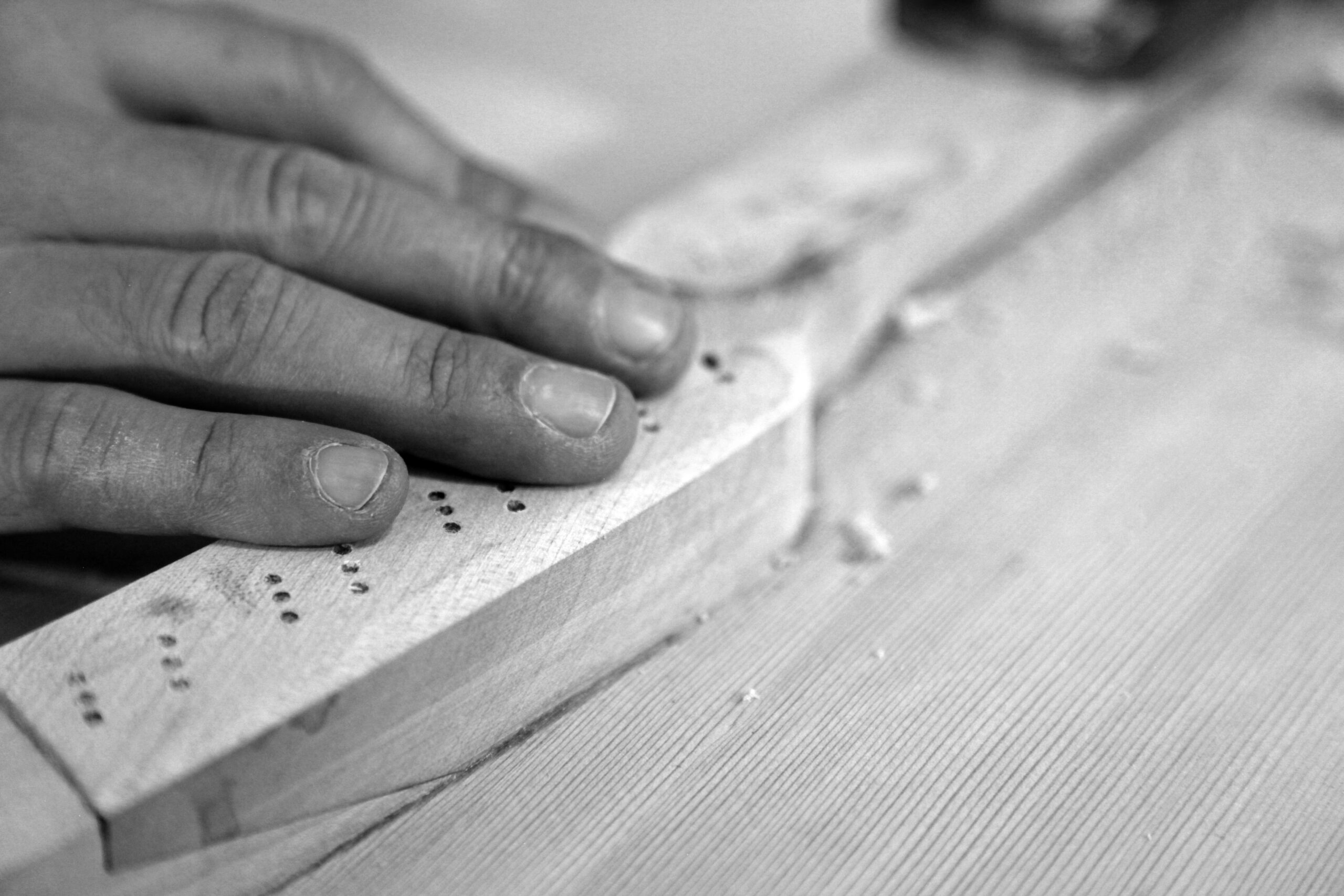
Piano repair restores the qualities the instrument has lost. A piano relies on a delicate and precise set of mechanisms that, key by key, transmit the force applied to the key to the hammer that strikes the string.
Due to regular use, environmental changes, and the passage of time, components can develop play, wear, deformation, friction, or break.
We repair and adjust the components and the interaction between them, optimizing the mechanics for the best possible transmission of force.
This is when piano repair becomes necessary. Whether in newer or older pianos, they often require intervention that simple tuning, voicing, or regulation can no longer resolve, as component replacement is necessary.
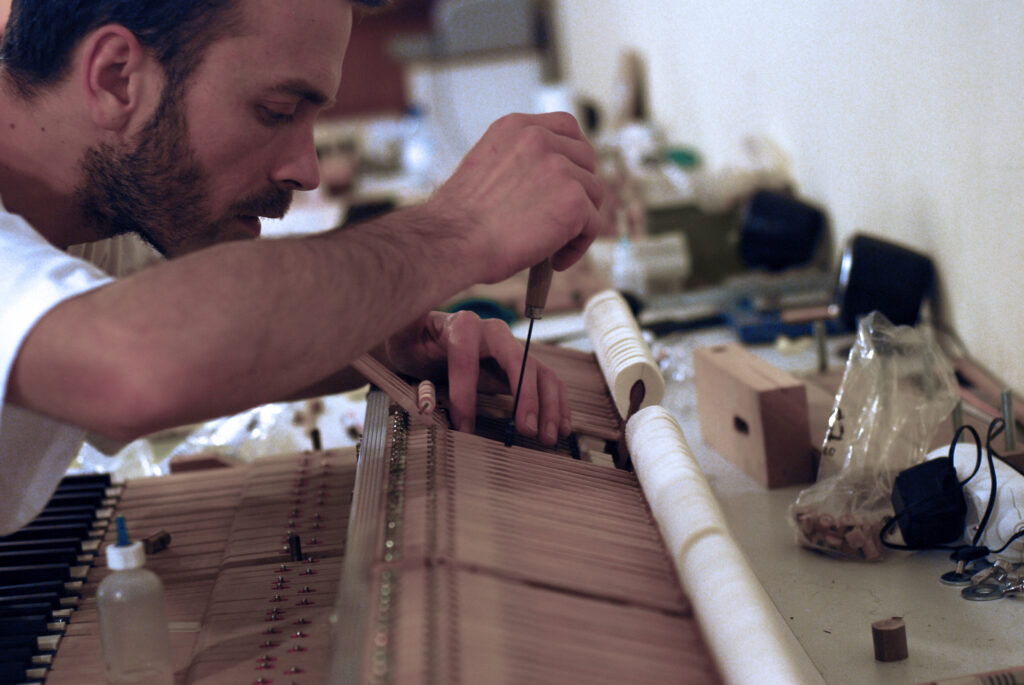
Whether too many strings have broken due to age, or whether they have lost too much of their character and become lackluster, there comes a point when it makes sense to restring the piano. The same is true when the hammer heads can no longer be resurfaced or when they dry out to the point of losing the elasticity essential to restoring the instrument’s full potential. These are the two repairs whose results are most obvious in terms of the piano’s sound, but they are not the only ones the instrument may need. Mechanical and/or keyboard repairs are even more frequent and substantially improve the quality of the playing experience. The various felts, leathers, pins, and other components wear down progressively and eventually reach a point where they prevent the piano from being properly regulated. The same can happen with string wear and tuning, or with the aging of the hammers and voicing.
Restoration
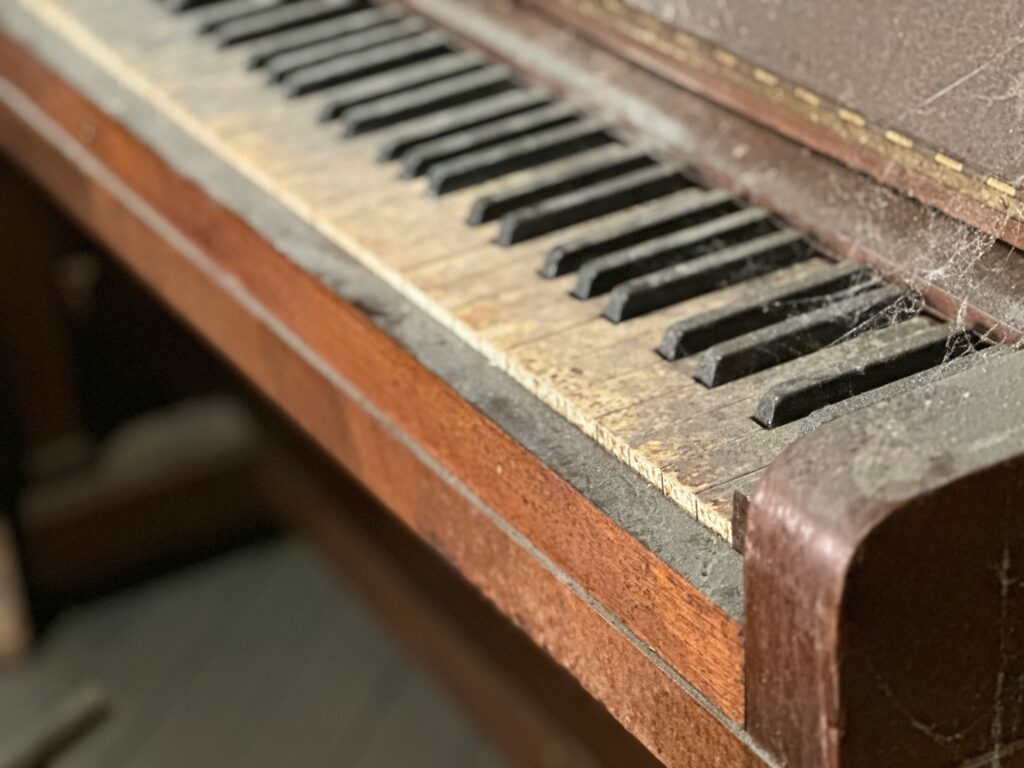
Restoration differs from repair in that it involves considerations of historical accuracy, and the client may choose to preserve or alter these aspects.
When aiming for historical accuracy, we use materials, components, and techniques consistent with the manufacturer and the period of manufacture.
When seeking to modernize, we use contemporary materials, components, and techniques that give the instrument a sound and durability that were not yet possible at the time of manufacture.
Piano restoration is the most extensive service we offer, as it includes all previous services (tuning, voicing, regulation, and repair).
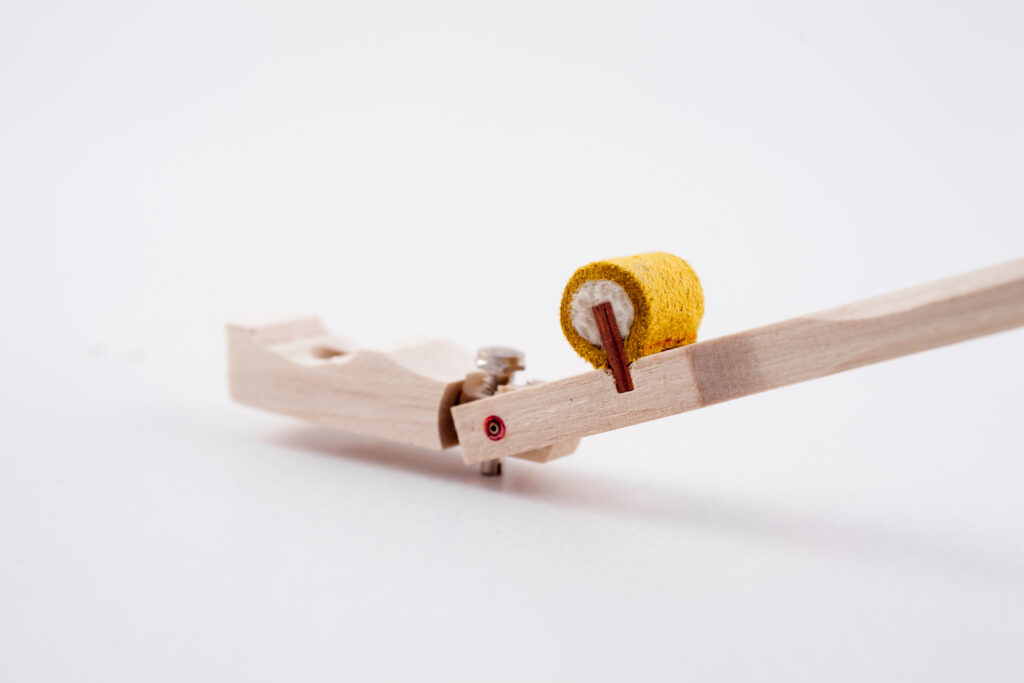
Of course, the extent of the work can vary depending on the piano’s needs and the client’s goals. During restoration, multiple component replacements may be required for four main reasons: wear and tear, malfunction, instrument optimization, or the component’s unavailability. Some of these replacements—namely the bass strings, tuning pins, and wooden parts—are custom-made specifically for each piano. Furthermore, felts and other components, such as springs, keyboard covers, and skins, are kept in stock in a wide variety of thicknesses, densities, and colors to ensure optimal functioning of the action, keyboard, and pedal system, as well as other moving parts.
Although the starting point for a restoration or repair is the use of the same component specifications, it is not uncommon for current knowledge and modern technology to allow for optimization compared to what was calculated during manufacturing, sometimes over 100 years ago. For our most discerning clients, we have not only been recalculating the string layout and the action geometry, but also replacing them, when desired, with materials that offer significant advantages.
Maintenance
Customized maintenance plans tailored to each client’s needs, providing ongoing technical services to ensure consistent piano performance at the best possible price.
Maintenance is inevitable for any musical instrument, and given its complexity—with around 230 strings and composed of approximately 8,000 individual components—the piano is no exception. Here, we refer to maintenance as a regularly scheduled service, primarily for schools and conservatories, as well as studios, concert halls, and professional pianists.
Pianos, despite their sturdiness—which allows them to be transported to concert halls without becoming misaligned and with virtually no loss of tuning—also have their sensitivities, which must be taken into account to ensure they are well cared for and maintain the quality of their construction.
Piano maintenance primarily consists of three services: tuning, voicing, and regulation. These can be performed together or separately, although they are interrelated. A piano can only sound well-tuned if it is well-voiced and well-regulated. The goal of regular piano maintenance is to ensure not only that the piano remains in optimal condition, so that you can continually enjoy the best it has to offer, but also that a lack of maintenance does not reach the point of degrading or even compromising its components. For example, if the tuning pins become too stiff and/or too bent, the likelihood of strings breaking is much higher, just as when the piano is significantly out of tune below the standard pitch and excessive tension must be reapplied to the strings. In terms of the action’s mechanics, there are operating limits beyond which the movement of one component can exert excessive force on another with which it interacts, sometimes leading to breakage or the need for replacement due to irreversible damage.
Painting
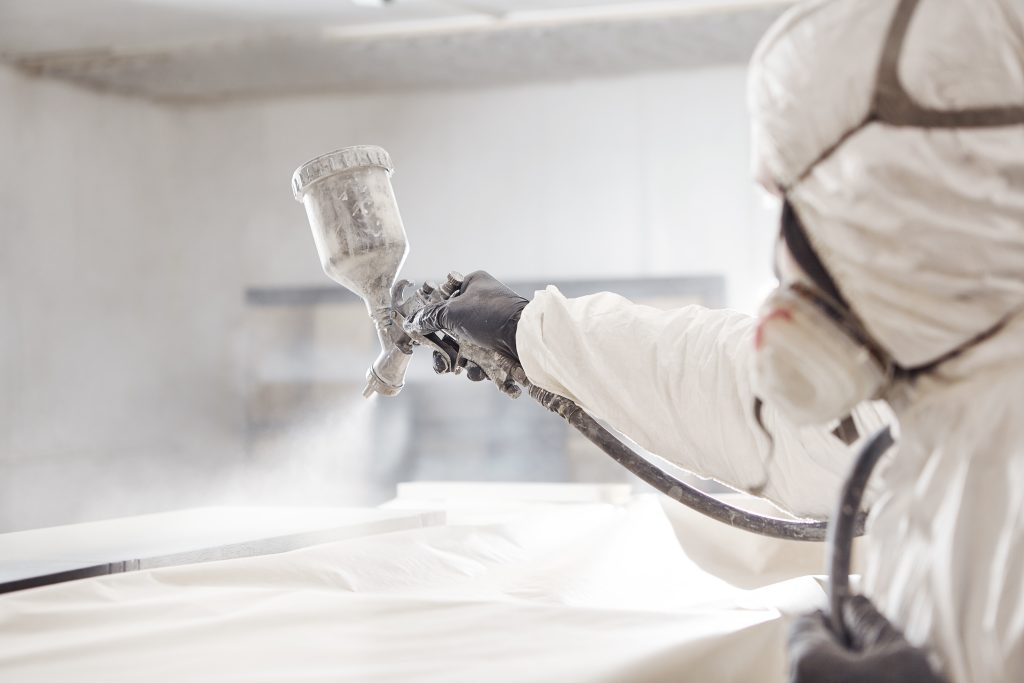
Piano painting is directly linked to aesthetics and serves primarily to beautify the piano itself, as well as its surrounding design.
There are six possible finishes for a piano, namely: Museum-Style Restoration, Glossy Acrylic Finish, Matte Acrylic Finish, Glossy Polyester Finish, Shellac Finish, and Custom Painting.
Museum Integration essentially leaves the piano’s appearance “as is,” preserving all its patina and signs of age, while making minor color touch-ups and restoring some of its original “luster.”
Glossy or Matte Acrylic finishes are equivalent to those used on automobiles, leaving the piano looking like new, either glossy or matte.
Glossy Polyester is the standard factory finish on new and recent pianos; it is a highly durable, thick paint with a high-gloss, mirror-like finish.
The Shellac finish is where it all began in the history of pianos, back when chemical paint components and airbrushes did not yet exist. It is a time-consuming process, made with natural resins and pigments, and is well-known and seen on all pianos over 80 years old.
With Custom Painting, the customer chooses a design, and we find a painter capable of reproducing it on the piano. Let the ideas flow, and let possibilities become reality.
Restore your piano to the aesthetic personality you desire!